


News Center
Auto Precision Emulsion Coating Machine vs Manual Coating: The Real Cost of Inconsistency
 2026-10-15
 110
110
The Hidden Cost You Are Not Tracking
Most screen printing shops track labor, emulsion, and mesh expenses carefully. But there is one cost that rarely appears on any spreadsheet: inconsistency.
When you coat screens manually, your emulsion over mesh (EOM) can vary by as much as 20% from screen to screen depending on coating speed. That variation cascades through your entire production process:
Exposure times become unreliable
Stencil breakdown increases on press
Pinholes and edge definition problems multiply
Reprints eat into your margins
A single reshoot costs more than the emulsion. It costs press time, labor, and delivery deadlines.
Why Manual Coating Fails at Scale
Manual coating is a skill — but it is also a bottleneck. Angle, speed, pressure, scoop coater condition, emulsion level, and individual technique all affect the final result.
The problem is not that skilled operators cannot produce good screens. The problem is that different operators produce different results, and even the same operator cannot replicate perfectly across a 50-screen batch. One study found that manual coating time averages 8 minutes per screen when accounting for handling, drying, and rework.
For shops running high-volume orders or serving clients with strict repeatability requirements, this variability is a direct threat to profitability.
What Automatic Precision Actually Delivers
Automatic emulsion coating machines solve the consistency problem by removing the human variable. Programmable controllers and stepless speed regulation ensure that every screen receives the same emulsion thickness, coating speed, and pressure — regardless of which operator is on shift.
The practical benefits are measurable:
Reduced plate defects and material waste — consistent EOM means fewer under- or over-exposed screens
Lower labor costs — staff can focus on other tasks while the machine coats
Faster turnaround — automatic coaters process screens continuously without fatigue-related slowdowns
Predictable exposure times — consistent stencil thickness means your exposure calculator actually works
The Subit SBT-TP1215: Built for Real Production
The SBT-TP1215 Auto Precision Emulsion Coating Machine from Shenzhen Subit is engineered specifically for workshops that have outgrown manual methods.
Key specifications:
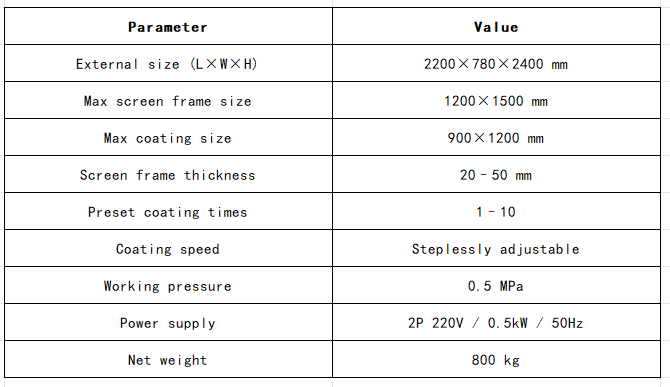
The machine uses a timing belt transmission for smooth, low-vibration power delivery, a walking linear guide with linear bearings for backlash-free coating travel, and a programmable controller with inverter for precise parameter setting. The rigid 800kg structure maintains accuracy even during continuous operation.
Is Automation Right for Your Shop?
Automatic coating is not necessary for every operation. Smaller shops with low screen volumes can still achieve good results manually if their process is dialed in.
But if any of the following describes your situation, the math has already shifted in favor of automation:
You coat more than 30 screens per day
You have multiple operators coating screens
Your clients demand repeatable results across large orders
You are losing money on reprints caused by inconsistent stencils
The real cost of manual coating is not the time it takes. It is the inconsistency you cannot see until the job is already on press.
Ready to calculate your actual ROI?
Subit offers custom configurations, sample testing support, and full after-sales service for all coating machines. Contact our sales team today for a detailed quotation and technical consultation. We respond within 24 working hours.
Previous: Stencil Inspection Machine Price Guide: What Drives Cost from $5,000 to $80,000 Next: What Tension Range Do You Actually Need? A Practical Guide for Screen Printing Mesh


