


News Center
Full Auto Laser Exposure Machine with Touch Screen: The Smart Upgrade for Your Shop
 2026-08-25
 174
174
Traditional screen exposure relies on film positives, vacuum frames, and UV lamps that degrade over time. Film stretches, lamps fade, and registration errors waste both time and materials.
Laser direct imaging (LDI) changes that completely. A precision laser draws the image directly onto the emulsion‑coated screen—no film, no vacuum, no alignment drift.
The benefits are clear:
Speed – Expose a standard screen in 90 seconds; large‑format (1000×1500mm) in under 8 minutes. That’s up to 80% faster than conventional methods.
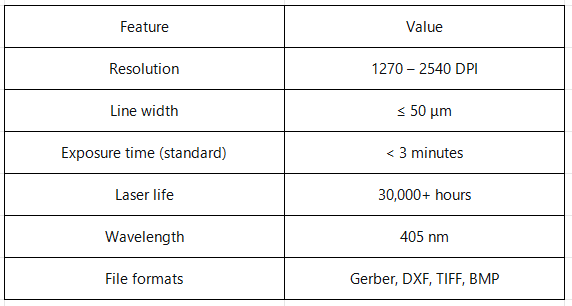
Precision – Achieve 2540 DPI resolution and line widths down to 50 microns. Finer details, sharper edges, and tighter registration.
Consistency – No film stretch or lamp decay. Every screen gets the exact same exposure, shift after shift.
Cost savings – Eliminate film inventory and replacement costs. Laser modules last 30,000+ hours with 10,000 hours of stable output.
Touch‑screen automation makes it effortless:
The intuitive panel lets you save presets for different mesh counts, emulsions, and frame sizes. One‑touch startup, real‑time monitoring, fault alerts, and exposure logs mean new operators are productive in hours, not days.
Who benefits most?
PCB manufacturers needing fine‑line accuracy
Textile printers handling frequent design changes
Glass and automotive printers requiring uniform large‑format exposure
Electronics makers demanding repeatability within 0.1mm
Key specs at a glance:
The bottom line:
Upgrading to a full auto laser exposure machine with touch screen cuts film costs, reduces labor, improves quality, and speeds throughput. The return on investment comes from material savings alone—not to mention fewer remakes and higher capacity.
If you’re still burning screens with film, you’re leaving efficiency on the table. Laser direct imaging with touch‑screen control is the new industry standard—and it’s accessible for shops of every size.
Previous: Why Global Manufacturers Are Switching to Non-Vacuum Centrifuge Defoaming Mixers Next: High-Speed SMT First Article Inspection Machine | Get a Quote Today


