



News Center
Clogged Apertures Killing Your Yield? Automated Stencil Inspection Fixes It at the Source
 2026-08-17
 205
205
If you’ve been chasing yield issues downstream—at SPI, AOI, or even functional test—you already know the feeling. The defect shows up late, the root cause is hard to trace, and the rework cost stacks up fast.
Here’s the reality most SMT lines overlook: the defect often starts before a single board is printed. It starts with the stencil.
The Hidden Cost of Clogged Apertures
Industry data consistently shows that 60% to 80% of SMT defects trace back to the solder paste printing stage. And within that stage, stencil condition is the single most influential variable.
Clogged apertures don’t just reduce paste transfer efficiency—they distort it. Dirty apertures cause uneven paste release, leading to insufficient deposits, solder bridging, inconsistent paste geometry, and increased rework rates. Clean stencil surfaces maintain transfer efficiency between 80% and 100%; defective apertures disrupt volumetric transfer and alter solder geometry.
The problem compounds in high-frequency production. A slight insufficiency trend or a bridge-prone region can quietly multiply across hundreds of boards before operators notice the pattern. By the time a defect surfaces at AOI after reflow, the cost to correct it is 20 to 50 times higher than catching it at the source.
Beyond Blockage: The Full Stencil Health Picture
Aperture blockage is the most visible culprit, but it’s not the only one. Tension relaxation, edge burrs, foreign object debris (FOD), and physical damage all compromise print repeatability.
IPC-7525 standards set clear benchmarks: new stencils should maintain tension above 35N/cm, with active stencils requiring replacement below 25N/cm. Yet many factories still rely on subjective operator judgment to assess these parameters. The gap between what should be measured and what actually gets measured is where yield leaks.
Automated Stencil Inspection: Intercepting Defects Before They Print
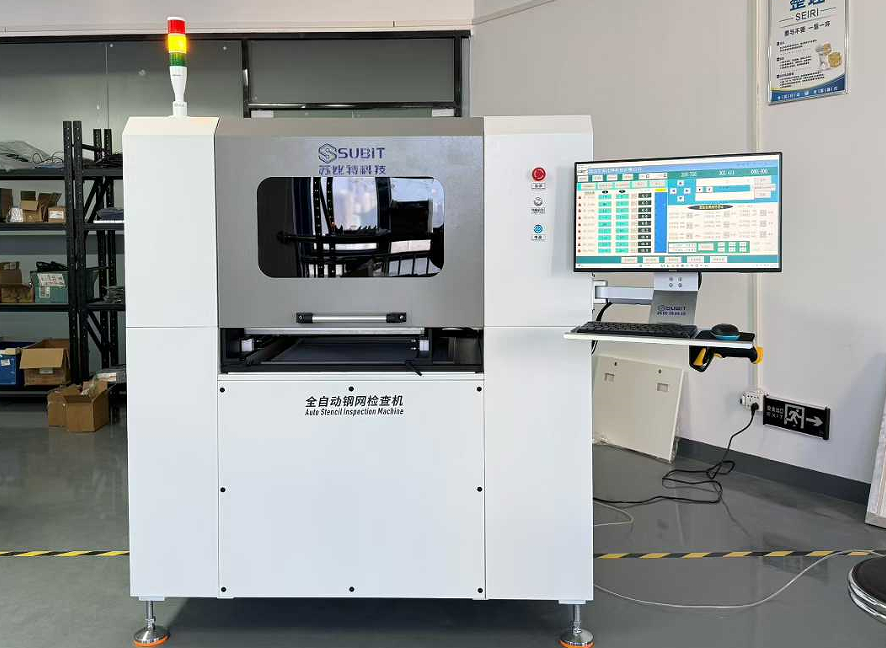
This is where Automated Stencil Inspection (ASI) changes the game. Unlike manual checks or downstream inspection systems that react to defects after they occur, ASI verifies stencil readiness before printing begins.
A capable ASI system performs four critical functions:
Aperture inspection – Detects blockages, residual contamination, and foreign objects that would otherwise alter paste transfer
Tension testing – Measures tension at multiple positions with high accuracy, providing objective data for replacement decisions
Damage detection – Identifies burrs, deformation, and physical wear that compromise print quality
Data traceability – Creates digital records linking each stencil to its inspection history, supporting audit requirements and process optimization
What to Look for in an ASI System
Not all stencil inspection solutions deliver the same value. When evaluating equipment, consider:
Inspection scope – Does it cover aperture blockage, foreign objects, tension, and physical damage in a single pass?
Detection capability – Can it reliably detect defects at the minimum feature sizes your production requires? (Our system detects down to 80μm × 80μm)
Speed – Inspection should not become a bottleneck. 0.9 seconds per FOV keeps the line moving
Accuracy – Repeatability precision of 3–8% ensures consistent, reliable results
Tension testing – Multi-position testing with ±1N/cm accuracy across a 0–50N range provides the data needed for confident decisions
Price Competitiveness - Is the cost reasonable and whether owning high using frequency? It is worth investing for every SMT production factories. No need extra importing programming files like CAD or Gerber to system and operator can use it directly.
Ease of use – Template setup in 2–3 minutes and intuitive operator interfaces reduce training overhead
From Reactive to Predictive Quality Control
The shift from manual stencil checks to automated inspection represents a fundamental change in quality philosophy. Instead of reacting to defects discovered downstream, manufacturers gain objective, repeatable, data-driven verification before production starts.
This approach delivers measurable results: reduced rework, higher first-pass yield, longer stencil life, and lower operational costs. More importantly, it protects your production schedule and customer confidence by preventing defects from reaching the board in the first place.
The Bottom Line
Your stencil is the foundation of every print. If the foundation is compromised, no amount of downstream inspection will fully recover the yield. Automated Stencil Inspection fixes the problem at the source—before a single board is printed, before a single defect escapes, before a single dollar is spent on rework.
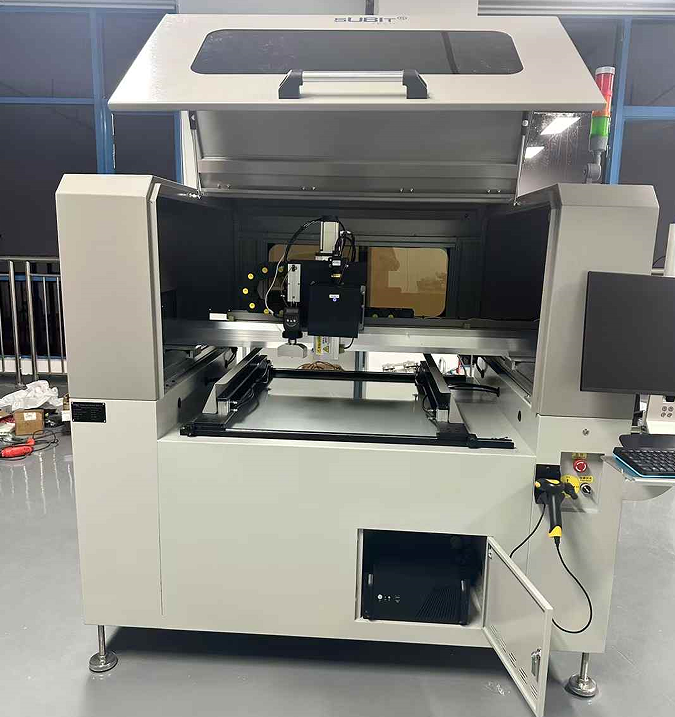
SBT-JC1009SA Automatic Stencil Inspection Machine – Inspect what matters, where it matters.
Previous: SMT Stencil Cleaning Done Right: Eco‑Friendly, Automated, and Built for Zero Waste Next: Screen Stretching Machines: Why Tension Precision Is Your #1 Profit Driver


