


News Center
Non-Vacuum Planetary Centrifugal Mixer: A Comprehensive Guide for Buyers
 2026-07-22
 178
178
What Is a Non-Vacuum Planetary Centrifugal Mixer?
A non-vacuum planetary centrifugal mixer is a mixing system that combines two distinct motion patterns: planetary revolution around a central axis and simultaneous rotation of the mixing container on its own axis. This dual-action mechanism generates powerful centrifugal forces that enable rapid, uniform blending of materials without the need for vacuum-assisted processing.
Unlike vacuum planetary mixers that require sealed chambers and vacuum pumps to remove entrapped air, non-vacuum models operate under ambient atmospheric conditions. This design choice significantly reduces equipment complexity, initial investment, and ongoing maintenance requirements.
How Does It Work?
The working principle centers on the planetary motion—the mixing vessel orbits the central drive shaft while spinning independently. This creates a continuous folding and shearing action that thoroughly homogenizes materials. The centrifugal force generated during operation pushes materials outward and upward along the container walls, while the planetary revolution ensures that no dead zones remain in the mixture.
Key operational parameters include:
Revolution speed – determines the overall mixing intensity
Rotation speed – controls the shear force applied to materials
Mixing time – varies based on material properties and desired homogeneity
Key Advantages Over Vacuum Counterparts
1. Lower Capital Expenditure
Non-vacuum systems eliminate expensive vacuum pumps, sealed chambers, and complex sealing mechanisms, making them significantly more affordable for businesses with budget constraints.
2. Simplified Operation and Maintenance
Without vacuum components, these mixers require less specialized training to operate and maintain. Routine maintenance typically involves basic cleaning and periodic lubrication rather than vacuum system inspections.
3. Faster Cycle Times
The absence of vacuum pumping stages means mixing cycles are shorter—particularly beneficial for high-throughput production environments where every minute counts.
4. Greater Flexibility
Non-vacuum mixers can accommodate a wider range of container types and materials, as they don't require vacuum-compatible vessels or specialized sealing interfaces.
Ideal Applications
Non-vacuum planetary centrifugal mixers excel in applications where:
Material viscosity is moderate to high (pastes, gels, slurries)
Air entrapment is not a critical quality concern
Production volumes require rapid turnaround
Budget constraints favor simpler equipment configurations
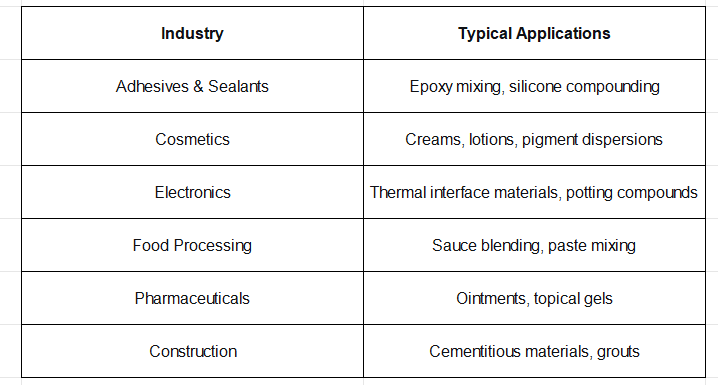
Common industries utilizing these systems include:
What to Look for in a Supplier
When evaluating non-vacuum planetary centrifugal mixer suppliers, consider these critical factors:
Engineering Expertise
Look for suppliers with demonstrated experience in centrifugal mixing technology. Ask about their design philosophy, material selection criteria, and quality control processes.
Customization Capabilities
Not all mixing applications are identical. A reliable supplier should offer options for:
Container size and configuration variations
Speed control ranges
Material of construction (stainless steel, coated surfaces, etc.)
Safety interlocks and monitoring systems
After-Sales Support
Evaluate the supplier's spare parts availability, technical support responsiveness, and warranty terms. Equipment downtime can be costly, so prompt service matters.
Compliance and Certification
Ensure the supplier's equipment meets relevant industry standards for your region and application—whether that's CE marking, UL certification, or industry-specific requirements like GMP compliance for pharmaceutical applications.
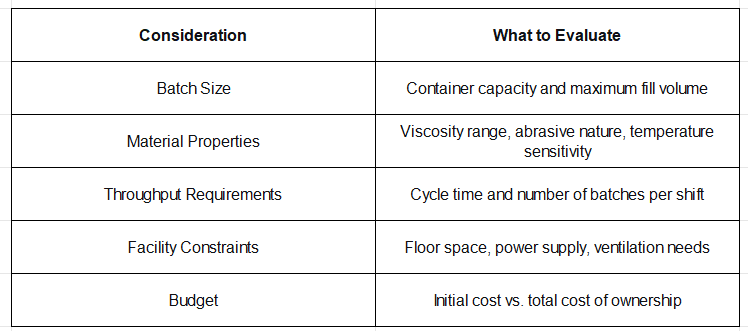
Selection Criteria: Finding the Right Fit
Maintenance Best Practices
To maximize equipment lifespan and mixing consistency:
Regular cleaning – Remove residual materials after each batch to prevent cross-contamination
Lubrication schedule – Follow manufacturer recommendations for bearing and drive system maintenance
Speed calibration – Periodically verify that actual speeds match displayed values
Container inspection – Check for wear, deformation, or damage that could affect mixing performance
Conclusion
Non-vacuum planetary centrifugal mixers offer a compelling balance of performance, affordability, and operational simplicity for a wide range of industrial mixing applications. By understanding the technology fundamentals and carefully evaluating supplier capabilities, buyers can select equipment that delivers consistent results while optimizing their capital investment.
When choosing a supplier, prioritize technical expertise, customization flexibility, and reliable after-sales support—these factors ultimately determine the long-term value of your mixing equipment investment.
Previous: Green SMT Stencil Cleaning: Compliance & Efficiency Next: 900ML High Speed Centrifugal Mixing Equipment


