


News Center
Automatic Screen Stretching Machine with Digital Tension Monitor for Precision Printing
 2026-07-08
 208
208
In the screen printing industry, the quality of your final print is only as good as the preparation that goes into it. One of the most critical factors determining print accuracy is mesh tension consistency. Traditional manual or semi-automatic stretching methods often rely on the operator’s “feel” to judge tension, leading to uneven tension, mesh deformation, and wasted materials. That’s where an automatic screen stretching machine with a tension monitor becomes an essential investment for any serious screen printing operation.
Why Tension Monitoring Matters
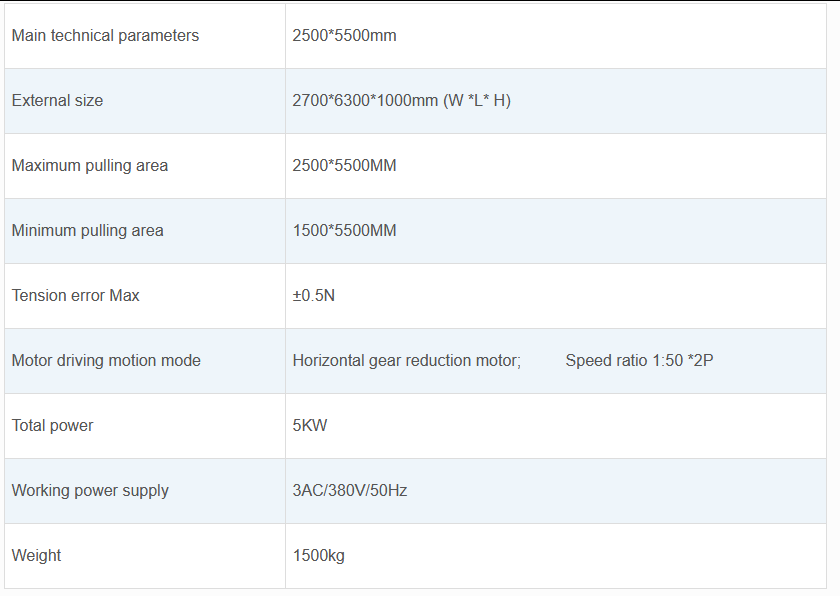
Inconsistent screen tension causes a cascade of printing problems: dot deformation, uneven ink thickness, and frequent rejects. An automatic stretching machine equipped with a high-precision tension sensor and closed-loop control system solves this by monitoring and adjusting the tension of each area of the mesh in real time. This ensures the tension distribution across the entire screen surface is highly uniform, with control accuracy reaching up to ±0.5N. The result? Superior print quality, higher yields, and significantly less waste.
Key Advantages of an Automatic Stretching Machine with Tension Monitor
1. Precision Tension Control
Built-in digital tension meters and closed-loop feedback algorithms dynamically adjust mesh tension throughout the stretching process. Operators simply enter the target tension value, and the machine automatically stretches and stops when the set value is reached—eliminating guesswork and human error.
2. Fully Automated Operation
From screen frame placement and automatic clamping to multi-zone synchronous tension stretching and data recording, the entire process is automated. One-touch start significantly reduces manual intervention and boosts production efficiency—especially valuable for batch plate-making.
3. Consistent, Repeatable Results
The intelligent control system can store and recall tension parameter formulas for different stencil types. This ensures that every screen—regardless of operator or batch—is stretched to the exact same specifications, improving process standardization and quality traceability.
4. Wide Application Range
Automatic screen stretching machines are widely used across industries requiring high-precision meshes: solar photovoltaic, circuit board manufacturing, LCD touch screens, electronics, textile printing, glass printing, and more.
Technical Specifications at a Glance
Common Applications
PCB & Electronics Industry: High-precision circuit boards and touch panels
Textile & Garment Printing: Complex patterns and multi-color overprinting
Glass & Ceramic Decoration: High-quality screen plate making for precision printing
Solar & New Energy: Solar cell screens requiring high tension consistency
Medical & Automotive: Precision component printing
Why Choose an Automatic Tension Monitor Stretching Machine?
If you’re still using manual stretching or equipment without real-time tension feedback, you’re leaving quality and efficiency on the table. An automatic screen stretching machine with tension monitor delivers:
Higher yield rates – fewer rejects from tension-related defects
Reduced labor costs – automation minimizes operator involvement
Faster production cycles – shorter screen preparation time per job
Process standardization – consistent results across batches and operators
Ability to handle high-precision orders – meet the most demanding tension requirements
Ready to Upgrade Your Screen Stretching Process?
Investing in an automatic stretching machine with tension monitoring capability is investing in the consistency, quality, and scalability of your screen printing business. Whether you’re producing circuit boards, textiles, or precision signage, precise tension control is the foundation of every perfect print.
Contact us today to learn more about our automatic screen stretching machines and find the right model for your production needs.
Previous: High-Precision Screen Stretching Machines: Driving Efficiency and Quality in Modern Screen Printing Next: Precision Screen Stretching Machine: The Essential Tool for High-Quality Screen Printing


