



News Center
SMT Squeegee Blade Cleaning Machines: Boost Yield and Cut Costs
 2026-06-02
 249
249
Solder paste printing causes 60-70% of all PCB assembly defects, and the squeegee blade is critical to this process. While most manufacturers focus on stencil maintenance, proper squeegee cleaning is often overlooked. Manual cleaning methods are inconsistent, time-consuming, and costly. This guide explains how SMT squeegee blade cleaning machines solve these problems and help you optimize your SMT production.
The Hidden Costs of Manual Squeegee Cleaning
Manual cleaning with wipes and solvents creates significant hidden expenses:
Inconsistent results: Operator-dependent cleaning leads to uneven paste deposition and higher defect rates
Accelerated wear: Abrasive cleaning scratches blade edges, reducing lifespan by up to 50% and damaging stencils
Production downtime: 5-10 minutes per blade adds up to hours of lost production weekly
Safety risks: Operators are exposed to harmful solvents and solder residues
Cross-contamination: Shared cleaning materials cause defects when switching paste types
Key Benefits of Automated SMT Squeegee Cleaning
Automatic SMT squeegee cleaning machines eliminate all manual cleaning limitations:
Consistent quality: Pre-programmed cycles deliver uniform cleaning every time, reducing print defects by up to 40%
Extended blade life: Gentle cleaning doubles blade lifespan, cutting replacement costs significantly
Maximized uptime: Clean 4-6 blades simultaneously in 5-10 minutes during scheduled breaks
Improved safety: Fully enclosed systems eliminate direct chemical exposure
Environmental savings: Closed-loop systems reduce chemical consumption by 80%
Process control: Store multiple cleaning programs for different blade types and maintain full traceability
Top Cleaning Technologies Compared
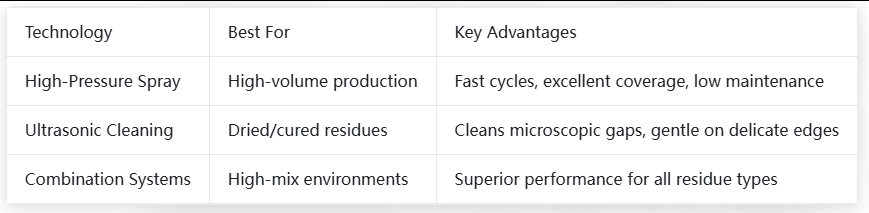
All quality machines include hot air drying to ensure blades are ready for immediate use.
Essential Features to Look For
When selecting an SMT squeegee cleaner, prioritize these features:
Batch capacity of 4-6 blades (up to 600mm length)
Compatibility with both stainless steel and polyurethane blades
Programmable cleaning parameters with multiple program storage
Multi-stage filtration system (down to 1μm)
Safety features: door interlocks, over-temperature protection, emergency stop
Compact off-line design with easy maintenance access
Best Practices for Squeegee Maintenance
Maximize your investment with these simple practices:
Clean blades after every 4-6 hours of operation
Inspect edges for damage before and after cleaning
Use manufacturer-recommended water-based cleaning solutions
Store clean blades in protective covers, never stacked
Establish clear SOPs and train all operators
ROI Calculation
Most facilities achieve full ROI within 6-12 months through:
50% reduction in blade replacement costs
100+ hours of additional annual production time
Lower rework and scrap expenses
Reduced chemical purchasing and disposal costs
Improved labor productivity
Conclusion
Squeegee blade cleaning is a critical process that directly impacts your bottom line. Manual cleaning is outdated and costly, while automated SMT squeegee blade cleaning machines deliver consistent quality, extended tool life, and significant cost savings.
In today's competitive electronics manufacturing environment, upgrading to an automated cleaning system is an essential investment that improves production efficiency, product reliability, and overall profitability.
Previous: Semi Auto Squeegee Inspection: Boost SMT Yield & Reduce Waste Next: Eco-Friendly SMT Stencil Cleaning Machines: Boost Yields, Cut Costs & Meet Regulations


