



News Center
The Semi-Automatic Template Inspection Machines: Boost Quality and Efficiency in SMT Production
 2026-05-18
 110
110
The Ultimate Guide to Semi-Automatic Template Inspection Machines: Boost Quality and Efficiency in SMT Production
In today's fast-paced electronics manufacturing, balancing consistent quality with tight production deadlines is a constant challenge. The semi-automatic template inspection machine has become the go-to solution for SMT facilities seeking to overcome manual inspection limitations without the high cost of fully automated systems. This guide covers everything you need to know about these essential quality control tools.
How Semi-Automatic Template Inspection Works
A semi-automatic stencil inspection machine combines human expertise with automated image recognition to evaluate SMT stencil quality. High-resolution cameras capture detailed stencil images, which the system compares against Gerber files to identify deviations. Operators review flagged areas and make final pass/fail decisions, retaining critical decision-making control.
Key automated functions:
Precise stencil alignment and scanning
Micron-level dimension measurement
Multi-point tension testing
Defect detection and classification
Automated reporting and data storage
Critical Industry Applications
SMT stencil inspection equipment is essential across sectors where precision is non-negotiable:
Electronics manufacturing: Prevents solder paste deposition defects that cause bridges, opens, and tombstoning
Automotive electronics: Ensures reliability of engine control units and safety sensors
Medical devices: Helps meet strict regulatory requirements for patient safety
5G and LED: Maintains signal integrity and product longevity through precise solder joints
5 Key Benefits of Implementation
Superior detection accuracy: Catches 10μm+ defects missed by manual inspection, reducing overall defect rates by up to 90%
Dramatic efficiency gains: Inspects stencils in 10-30 seconds vs. 15-30 minutes manually
Significant cost savings: Eliminates 60-70% of SMT printing problems, delivering ROI in under 12 months
Consistent results: Provides objective measurements that eliminate operator-to-operator variability
Complete traceability: Automatically records inspection data for compliance and root cause analysis
Semi-Automatic vs. Fully Automatic: Which Is Right for You?
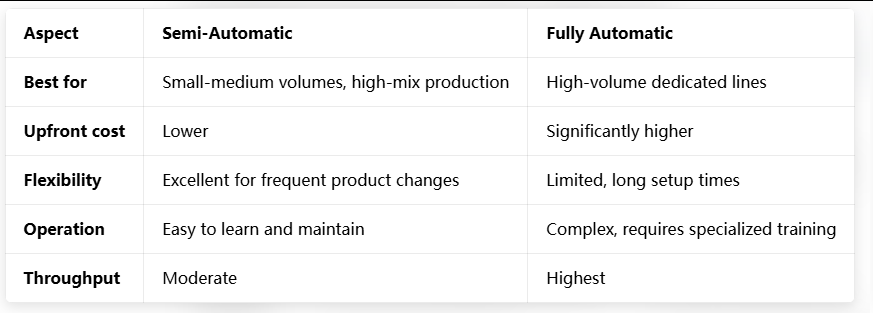
For most electronics manufacturers, semi-automatic stencil inspection equipment offers the optimal balance of performance, flexibility, and cost.
Essential Features to Look For
When selecting a semi-automatic template inspection machine, prioritize:
5MP+ industrial cameras with sub-pixel measurement accuracy
Detection of all common defects (blockages, cracks, warping, misalignment)
Integrated multi-point stencil tension measurement
Intuitive software with one-click inspection and automatic program generation
MES/QMS integration and standard data export (CSV, PDF)
Compatibility with all common stencil sizes and frame types
Implementation Best Practices
Define clear standards: Document acceptance criteria for dimensions, tolerances, and defect thresholds
Establish a regular schedule: Inspect after each cleaning, perform full checks based on production volume
Train operators thoroughly: Ensure they can interpret results and make informed decisions
Maintain detailed records: Track stencil history, inspection results, and corrective actions
Leverage data for improvement: Use inspection data to identify trends and optimize processes
Common Challenges & Solutions
False positives: Fine-tune sensitivity levels and create custom rules for different stencil types
Stencil variability: Maintain a library of optimized inspection programs for each stencil design
Operator turnover: Choose systems with intuitive interfaces and comprehensive training materials
Conclusion
The semi-automatic template inspection machine is a transformative investment for electronics manufacturers. By combining human expertise with automated precision, it delivers exceptional quality control at a fraction of the cost of fully automated systems.
When implemented with clear standards and proper training, these systems reduce defects, increase throughput, and provide the traceability needed to compete in today's global marketplace.
Previous: The Ultimate Guide to Stencil Inspection Machines: Boost SMT Yield and Reduce Defects at the Source Next: no more


